
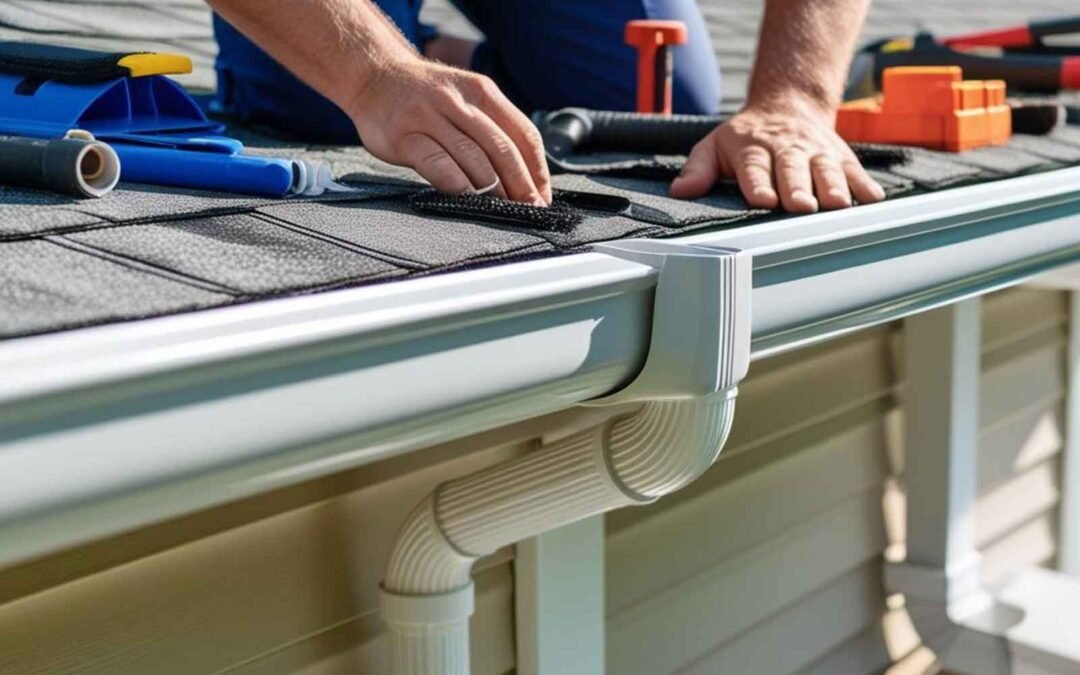
If you are looking at water stains on the ceiling, missing shingles after a storm, or a roof that just looks tired, the big question is usually not “Do I need help?” It is “Do I need a repair, or is it time for a full replacement?”
That decision matters because the price difference can be significant. Current 2026 cost guides put roof repair at roughly $394 to $1,962 on average, while roof replacement averages about $9,543 nationally, and a 2,000-square-foot asphalt shingle roof can run much higher depending on materials, layout, and location. In other words, a repair may be a manageable fix, while a replacement is a bigger investment that needs careful planning.
For Long Island homeowners, the smartest way to decide is not by guessing from the driveway. It is by looking at three things together: the age of the roof, how widespread the damage is, and whether a repair will truly solve the problem or just delay a bigger one. Goodfellas’ own roofing services page reflects that same approach, with separate service lines for roof repairs, full replacements, guttering, fascias and soffits, emergency work, and attic insulation because roofing problems rarely exist in isolation.
Start With the Simplest Question: Is the Damage Small and Localized?
A repair usually makes sense when the problem is limited to one part of the roof and the rest of the system is still in good shape. That might mean a few missing shingles, a minor flashing issue around a vent or chimney, a small leak, or damage from one recent weather event. State Farm’s homeowner guidance puts it simply: newer roofs may only need repair, while older roofs may need replacement.
That is often the most human way to look at it. If your roof is relatively young and you have one isolated issue, replacing the whole thing can feel like replacing an entire car because of one flat tire. A focused repair may be the sensible choice, especially if a professional inspection shows the decking, underlayment, and surrounding shingles are still sound.
“Newer roofs may simply require repair, while older roofs may require replacement.”
When a Repair Is Usually the Better Option
In practical terms, repair is often the right call when:
- the roof is still well within its expected service life
- the damage is limited to a small area
- the leak source is clear and fixable
- the shingles are still available and can be matched reasonably well
- there are no signs of widespread sagging, rot, or repeated moisture problems
That is also the more cost-conscious path in many cases. Angi’s 2026 data says roof repair averages $394 to $1,962, while roof leak repairs alone often fall around $700 to $3,000, depending on access, material, and how far water has traveled.
For a Long Island homeowner, that can mean a repair is worth doing when the issue is caught early. A small flashing failure or a patch of wind damage is very different from an aging roof that has started leaking in several places. If the fix restores the roof’s integrity and buys you real time, repair can be the smarter financial decision. Goodfellas’ roof repair and emergency roofing services are built around that kind of quick, targeted response when the rest of the roof is still worth saving.
When Replacement Usually Makes More Sense
Replacement becomes the better choice when the damage is no longer a one-spot problem. If you are dealing with repeated leaks, widespread shingle failure, soft decking, large visible wear patterns, or a roof that is already at the later stage of its lifespan, patching one section may only postpone the inevitable. HomeAdvisor’s shingle roof guide says that if a roof is over 20 years old or has widespread damage, replacement is a better option than repair.
That matters because roofing systems age as a system. Once shingles, flashing, underlayment, ventilation, and edges all start declining together, repairs can become a cycle of short-term spending. IBHS notes that avoiding unnecessary roof replacement is tied to roofing system performance and product reliability, which is another way of saying the right decision is not always the cheapest today, but the one that makes sense for the roof as a whole.
A full replacement is also worth considering if you are already seeing several of the classic warning signs: missing or curling shingles, granular loss, cracked flashing, repeated interior stains, or moisture-related issues inside the home. State Farm advises homeowners to watch for mold, dampness or stains, musty odors, damaged shingles, damaged flashing, and drooping gutters, because these often signal a roof problem that needs professional attention.
The Cost Side: Roof Repair vs Roof Replacement Cost in Long Island
If you are comparing roof repair vs roof replacement cost Long Island, the big picture is straightforward: repair costs are usually measured in hundreds or low thousands, while replacement costs are usually measured in thousands to low five figures depending on roof size and complexity. Angi’s 2026 replacement guide gives a national average of $9,543, and This Old House says homeowners spend an average of $15,439 to replace a 2,000-square-foot asphalt shingle roof, with large variation based on materials, complexity, and location.
That is why there is no single universal answer to how much does roof replacement cost on Long Island. A simple ranch-style asphalt roof is not priced the same way as a steep multi-story home with chimneys, skylights, or difficult access. HomeAdvisor notes that labor, roof size, pitch, tear-off, and accessibility all meaningfully change the final number, and Forbes says roofer labor in New York averages about $102 to $153 per hour, which helps explain why local conditions and project complexity matter so much.
Homewyse’s May 2026 estimator also gives a useful baseline, putting basic asphalt shingle roof installation at about $5.09 to $6.66 per square foot before all job-specific realities are layered in. That is helpful for planning, but Long Island homeowners should still treat it as a benchmark, not a final quote. Tear-off, decking repairs, flashing replacement, gutters, ventilation upgrades, and disposal can all move the number higher.
A Better Way to Decide: Ask Whether the Repair Solves the Root Problem
This is the question many homeowners skip.
A repair is only a good value if it actually solves the issue. If the roof is leaking because of one damaged boot or one section of flashing, great. If the real problem is aging shingles, weak decking, poor ventilation, failing gutters, or recurring moisture intrusion, then a repair may only fix the symptom for a short time. State Farm specifically notes that poor flashing, gutter problems, and hidden moisture signs can all point to a bigger roof issue than homeowners first assume.
That is why it helps to think beyond shingles. Goodfellas’ roofing service pages tie roof performance to related components like guttering, fascias and soffits, and attic insulation, which is the right way to look at long-term roof health. If runoff is wrong or ventilation is poor, even a nice repair may not last as well as it should.
What This Often Looks Like in Real Life
Here is the honest version most homeowners can relate to.
If your roof is 8 to 12 years old and one storm peeled off shingles on one slope, you are probably looking at a repair conversation first. If your roof is 22 years old, has already been patched more than once, and now you are noticing stains in more than one room, replacement usually deserves serious consideration. That is not about contractors upselling. It is about whether you are spending money to restore value or just buying a little time. (
And if the damage is sudden and active, speed matters. Goodfellas’ emergency roofing page emphasizes rapid assessment, temporary protection, and fast repairs to prevent further damage, which is especially important when water is already getting inside.
How to Get a Roof Replacement Estimate Near You in Long Island
If you are searching for a roof replacement estimate near me Long Island, the best estimates are the ones built from an actual site visit, not a guess over the phone. A solid estimate should account for:
- roof size and pitch
- number of layers to remove
- shingle type and underlayment
- flashing details
- decking condition
- gutters and drainage
- ventilation and insulation concerns
- cleanup, disposal, and warranty scope
Those are exactly the kinds of details national cost guides say drive the final bill. They are also why two homes with similar square footage can receive very different quotes.
Final Thoughts
When deciding between repair and replacement, the goal is not to choose the cheaper option. It is to choose the option that makes sense for the roof you actually have.
If the damage is small, the roof is relatively young, and the problem is truly isolated, repair may be the right move. If the roof is older, the damage is widespread, or you are stuck in a cycle of recurring leaks and patch jobs, replacement is often the smarter long-term investment. That is usually the real answer behind searches like roof replacement cost Long Island, average roof replacement cost Long Island NY, and affordable roof replacement Long Island NY: the best value comes from solving the right problem the first time.